Sodium hyaluronate is the water-soluble sodium salt derivative of hyaluronic acid, recognized globally as a premier biomedical and cosmetic humectant capable of binding up to 1000 times its molecular weight in water. Characterized by superior chemical stability, lower molecular weight options, and enhanced epidermal penetration compared to standard hyaluronic acid, sodium hyaluronate penetrates deep into dermal layers to restore moisture reserves, reinforce structural matrix integrity, accelerate barrier repair, and deliver long-lasting hydration across diverse personal care, aesthetic, and pharmaceutical applications.
Table of Contents
What Is Sodium Hyaluronate?
Sodium Hyaluronate vs. Hyaluronic Acid: What's the Difference?
Why Sodium Hyaluronate Is a Game Changer for Skin
Deeply Hydrates and Locks in Moisture
Promotes Smoother, More Radiant Skin
Strengthens the Skin Barrier
Supports Balanced Skin
How to Use Sodium Hyaluronate in Your Skincare Routine
Start with a Gentle Cleanser
Apply a Serum on Damp Skin
Lock It In with a Moisturiser
Don't Forget SPF
Technical Quality Standards and Industry Applications
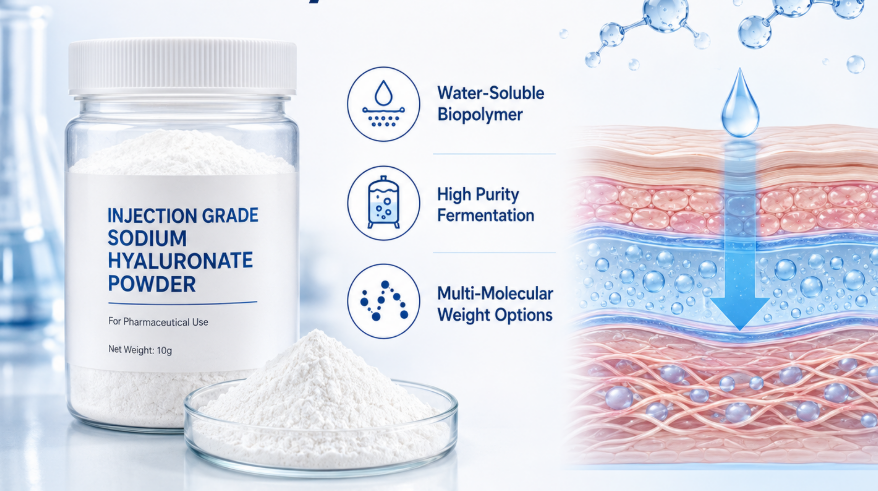
What Is Sodium Hyaluronate?
Sodium hyaluronate is a naturally derived glycosaminoglycan salt composed of repeating disaccharide units of D-glucuronic acid and N-acetyl-D-glucosamine, functioning as an essential biopolymer for extracellular matrix hydration and tissue repair.
From a bio-chemical perspective, sodium hyaluronate represents the extracted salt form of hyaluronic acid (HA). In human physiology, naturally occurring hyaluronan is distributed throughout connective tissues, epithelial structures, and neural tissues. However, raw native hyaluronic acid possesses an extremely large molecular mass ranging from 1,000 to 3,000 kDa, which presents severe physiological constraints regarding transdermal permeability and solution viscosity. Through advanced bio-fermentation processes utilizing non-pathogenic Streptococcus zooepidemicus strains, manufacturers produce purified sodium hyaluronate that can be tailored into specific molecular weight fractions. This fermentation method ensures high yield, exceptional purity, and complete absence of animal-derived pathogens, making it ideal for topical skincare, ophthalmology, osteoarthritis treatments, and medical aesthetics.
When formulated into high-performance cosmetic and medical products, the physical properties of sodium hyaluronate are governed by its hydrophilic structure. The carboxyl groups present on the D-glucuronic acid residues dissociate completely at physiological pH, yielding negatively charged polymer chains that attract positively charged hydrogen ions in water molecules. This hydrogen-bonding network enables the biopolymer to retain water at quantities up to one thousand times its dry mass. Furthermore, high-purity raw materials such as Injection Grade Sodium Hyaluronate Powder exhibit exceptional viscoelasticity and biocompatibility, making them indispensable for advanced dermatological formulations, dermal fillers, and intra-articular injections.
The functional performance of sodium hyaluronate depends directly on its molecular weight distribution. High Molecular Weight (HMW) polymers form a non-occlusive, viscoelastic film on the stratum corneum surface, preventing transepidermal water loss (TEWL) and protecting against atmospheric pollutants. Medium Molecular Weight (MMW) fractions penetrate the upper epidermal layers to reinforce intercellular cohesion, while Low Molecular Weight (LMW) and Oligo-sized sodium hyaluronate penetrate deeply into the dermis to stimulate endogenous HA synthesis, activate fibroblast proliferation, and down-regulate pro-inflammatory cytokines. Understanding these structural gradients allows formulators to design multi-tiered hydration systems that optimize both immediate skin feel and long-term tissue regeneration.
| Molecular Weight Grade | Dalton Range (kDa) | Intrinsic Viscosity (m³/kg) | Primary Skin Penetration Depth | Key Physiological Function |
| High Molecular Weight (HMW) | 1,800 – 2,200 kDa | ≥ 2.5 | Stratum Corneum Surface | Forms protective moisture barrier; reduces TEWL instantly |
| Medium Molecular Weight (MMW) | 1,000 – 1,500 kDa | 1.5 – 2.0 | Upper Epidermal Layers | Sustained hydration; enhances intercellular lipid matrix |
| Low Molecular Weight (LMW) | 100 – 400 kDa | 0.3 – 0.8 | Lower Epidermis / Basal Layer | Improves elasticity; supports cell proliferation and repair |
| Oligo / Micro Sodium Hyaluronate | < 10 kDa | < 0.1 | Deep Dermal Layers | Triggers endogenous collagen synthesis; anti-aging signaling |
| Parenteral / Injection Grade | 1,200 – 2,000 kDa | ≥ 2.0 | Subcutaneous / Intradermal | Tissue volumization; cellular matrix replacement |
Working Principle of Hyaluronic Acid Derivation: Commercial sodium hyaluronate is generated through controlled bio-fermentation followed by enzymatic degradation and precise ethanol precipitation. Controlled cleavage of the glycosidic bonds allows manufacturers to isolate target molecular weights while eliminating endotoxins, proteins, nucleic acids, and heavy metals. The resulting ionic salt form exhibits superior thermodynamic stability in aqueous solution compared to free acid forms.
Sodium Hyaluronate vs. Hyaluronic Acid: What's the Difference?
The essential difference between sodium hyaluronate and hyaluronic acid lies in chemical molecular structure, where sodium hyaluronate is the purified salt form that offers greater chemical stability, higher water solubility, resistance to oxidation, and reduced molecular size options for enhanced formulation versatility.
In raw biochemical state, free hyaluronic acid is an acidic molecule that exhibits poor stability in aqueous cosmetic solutions. It is prone to rapid enzymatic degradation and thermal breakdown during manufacturing processes involving high-shear mixing or heating phases. Conversely, neutralizing the acid with sodium hydroxide transforms the polymer into sodium hyaluronate, an ionic salt. This chemical modification increases the molecule's resistance to oxidation and thermal degradation, extending the shelf life of finished cosmetic and medical preparations while maintaining structural integrity across a broader pH spectrum (typically stable between pH 5.0 and 8.5).
From a formulation engineering standpoint, sodium hyaluronate provides substantial advantages over native hyaluronic acid regarding solubility and transdermal bioavailability. Free hyaluronic acid forms dense, highly viscous gels even at low concentrations (0.5% to 1.0%), which limits its incorporation into light emulsions, clear serums, sprayable toners, and injectable matrices. Sodium hyaluronate, due to its sodium counter-ions, displays higher water solubility and predictable rheological behavior. Formulators can easily dissolve bulk raw materials, such as high-purity Injection Grade Sodium Hyaluronate Powder, in water-based phases without requiring harsh organic solvents or extreme heat, preserving the structural bioactivity of the polymer.
Consumer perception often equates hyaluronic acid with skin hydration, but technical analysis reveals that almost all commercial skincare products labeled as containing hyaluronic acid actually utilize sodium hyaluronate. European and North American cosmetic regulations favor sodium hyaluronate due to its standardized purity profiles and predictable transdermal absorption characteristics. Furthermore, in clinical aesthetics and medical device manufacturing, only medical and injection grade sodium hyaluronate meets the stringent endotoxin requirements (<0.005 EU/mg) necessary for parenteral administration, intradermal mesotherapy, and ophthalmic surgery, where unrefined hyaluronic acid would trigger acute inflammatory responses.
| Comparison Parameter | Sodium Hyaluronate | Hyaluronic Acid (Free Acid) |
| Chemical Structure | Sodium salt of D-glucuronic acid and N-acetylglucosamine | Un-neutralized polyanionic polysaccharide acid |
| Water Solubility | High solubility; easily dissolves in cold aqueous media | Moderate to low solubility; tends to form heavy gel clumps |
| Molecular Weight Spectrum | Customizable from <3 kDa to >2,500 kDa | Predominantly high molecular weight (>1,500 kDa) |
| Oxidative & Thermal Stability | High stability under standard processing and storage conditions | Low stability; prone to oxidation and heat degradation |
| Skin Penetration Potential | Excellent across low and micro molecular weight variants | Limited to superficial stratum corneum hydration |
| Parenteral & Aesthetic Usability | Suitable for injection, mesotherapy, and topical serums | Restricted primarily to topical barrier creams |
Formulation Design Insights: Why do research and development teams favor sodium hyaluronate over free acid? Formulators in European and Asian markets emphasize ingredient bio-availability, thermal processing limits during emulsion cooling, and long-term clarity in aqueous serums. Sodium hyaluronate allows precise viscosity tuning through molecular weight blending, enabling non-sticky finishes, superior electrolyte tolerance, and compatibility with sensitive active ingredients like Vitamin C and niacinamide.
Why Sodium Hyaluronate Is a Game Changer for Skin
Sodium hyaluronate is a transformative skincare ingredient because it operates simultaneously across multiple epidermal and dermal layers, replenishing lost moisture, promoting collagen architecture repair, enhancing barrier lipid organization, and restoring optimal cellular hydration equilibrium.
Aging, environmental exposure, and ultraviolet radiation systematically deplete the skin's endogenous hyaluronic acid content. By age forty, the concentration of cutaneous hyaluronan drops to less than fifty percent of youthful levels, leading to dermal thinning, loss of elasticity, visible fine lines, and impaired barrier recovery. Incorporating bio-engineered sodium hyaluronate into topical formulations or aesthetic treatments directly counteracts this age-related decline. The biopolymer acts as a reservoir matrix, holding moisture in the intercellular spaces of the dermis and epidermis, which inflates cellular volume and yields immediate plumping effects.
Furthermore, scientific research indicates that low molecular weight sodium hyaluronate acts as a biological signaling molecule. Upon penetrating the stratum basale, degraded hyaluronan fragments bind to specific CD44 cell surface receptors on keratinocytes and fibroblasts. This receptor binding activates intracellular signaling pathways that upregulate endogenous hyaluronic acid synthase (HAS-2) enzymes, stimulate type I collagen synthesis, and promote epidermal cell turnover. Consequently, the ingredient does not merely supply external moisture; it actively rejuvenates the skin's biological capacity to retain hydration and maintain structural density over time.
In professional dermatological settings and aesthetic medicine, high-purity biopolymers such as Injection Grade Sodium Hyaluronate Powder represent the gold standard for restoring dermal volume, reducing deep nasolabial folds, and enhancing tissue repair post-laser therapy. The biopolymer's exceptional biocompatibility ensures zero immunogenicity, while its hydrogel matrix provides immediate mechanical cushioning and long-term extracellular matrix support.
1. Deeply Hydrates and Locks in Moisture
Sodium hyaluronate possesses unmatched hygroscopic properties that draw water from ambient air and deeper dermal layers into the stratum corneum. By forming a breathable, flexible hydrogel network across the skin surface, high molecular weight sodium hyaluronate prevents water evaporation while low molecular weight fractions bind water inside the intracellular matrix. This dual-action mechanism creates an environment of continuous hydration that prevents moisture loss throughout the day, even under low-humidity conditions or harsh environmental stress.
2. Promotes Smoother, More Radiant Skin
Dehydrated skin suffers from irregular keratinocyte desquamation, leading to rough texture, flaking, and dull light reflectance. By infusing the intercellular spaces with moisture, sodium hyaluronate restores normal enzymatic desquamation processes, allowing dead skin cells to shed smoothly. The resultant swelling of the upper epidermal layer fills in micro-fissures, smooths fine lines, and flattens rough surface topography, resulting in a luminous, light-reflecting skin finish often described as radiant or glass-like.
3. Strengthens the Skin Barrier
The stratum corneum relies on a delicate balance of lipids, ceramides, and natural moisturizing factors (NMF) to maintain its barrier integrity against pathogens, irritants, and environmental toxins. Sodium hyaluronate reinforces this physical barrier by integrating into the lipid bilayer matrix and promoting tight junction protein expression (such as Claudin-1 and Occludin) between keratinocytes. A fortified skin barrier significantly reduces skin reactivity, prevents transepidermal water loss, and shields vulnerable skin from external stressors.
4. Supports Balanced Skin
Impaired hydration frequently triggers compensatory sebum overproduction, leading to oily yet dehydrated skin conditions and acne flare-ups. Sodium hyaluronate restores ideal moisture levels without adding comedogenic oils or heavy occlusives. By rebalancing the moisture to oil ratio on the cutaneous surface, it signals sebaceous glands to normalize sebum secretion. Additionally, its non-comedogenic nature makes it ideal for acne-prone, sensitive, and post-procedure skin types that require intensive repair without pore blockage.
| Dermatological Metric | Control (Untreated) | Formulation with 0.5% Sodium Hyaluronate | Clinical Benefit / Impact |
| Stratum Corneum Hydration (Corneometer) | Baseline (100%) | +165% after 2 hours; +120% after 12 hours | Sustained deep hydration reservoir |
| Transepidermal Water Loss (TEWL) | Baseline (15.2 g/m²/h) | Reduced to 9.1 g/m²/h (-40.1%) | Substantial reinforcement of skin barrier |
| Skin Elasticity (Cutometer R2 value) | 0.58 | 0.74 (+27.6% after 28 days) | Improved firmness and elastic rebound |
| Surface Roughness (Ra Value, µm) | 14.2 µm | 9.8 µm (-31.0% after 14 days) | Visible smoothing of skin texture and lines |
Maintenance and Processing Tips for Manufacturers: When formulating cosmetic emulsions containing sodium hyaluronate, raw materials should be fully hydrated in ambient or warm water (below 60 degrees Celsius) under gentle agitation before adding to the main aqueous phase. Exposure to temperatures exceeding 80 degrees Celsius for extended periods or high-shear homogenization can shear the polymer chains, resulting in loss of molecular weight and reduced viscosity. Additionally, combining sodium hyaluronate with chelating agents like Disodium EDTA prevents trace metal ions from catalyzing oxidative degradation.
How to Use Sodium Hyaluronate in Your Skincare Routine
To maximize the physiological efficacy of sodium hyaluronate in daily skincare regimens, it should be applied to clean, slightly damp skin immediately after cleansing, followed by an occlusive or emollient moisturizer to lock in bound water molecules and prevent reverse evaporation.
Because sodium hyaluronate functions as a powerful humectant, its mode of application directly impacts its clinical performance. Applying sodium hyaluronate products to dry skin in arid environments can cause the polymer to draw water from the deeper dermal layers toward the surface, paradoxically exacerbating internal dehydration. Providing an external source of moisture—such as applying a hydrating mist, water, or toner prior to serum application—supplies abundant water molecules for the sodium hyaluronate matrix to absorb and hold within the upper epidermal layers.
Furthermore, logical ingredient layering plays a vital role in routine optimization. Sodium hyaluronate exhibits excellent synergy with complementary actives such as Niacinamide (Vitamin B3), Panthenol (Pro-Vitamin B5), Ceramides, and Peptides. In serum formulations, low viscosity sodium hyaluronate acts as an effective delivery vehicle, enhancing the penetration of co-formulated active ingredients. However, it should be paired carefully with strong exfoliants or highly acidic treatments (such as unbuffered L-Ascorbic Acid or high-concentration Alpha Hydroxy Acids below pH 3.5) to prevent polymer structure degradation and potential skin irritation.
In clinical aesthetics, post-procedure protocols frequently incorporate sterile sodium hyaluronate serums or sheet masks following microneedling, chemical peels, or fractional laser resurfacing. The pure, non-irritating nature of high-grade sodium hyaluronate calms erythema, accelerates re-epithelialization, and provides a sterile moisture barrier that speeds recovery while reducing post-inflammatory hyperpigmentation risks.
1. Start with a Gentle Cleanser
Effective hydration begins with a clean canvas that is free from excess sebum, urban pollutants, and heavy makeup. Utilizing a mild, pH-balanced (pH 5.5) gentle cleanser ensures that the skin's natural acid mantle and lipid barrier remain intact. Avoiding harsh sulfate surfactants prevents immediate moisture depletion, allowing sodium hyaluronate to build upon existing cutaneous hydration rather than repairing severe wash-induced dryness.
2. Apply a Serum on Damp Skin
Immediately after cleansing and lightly patting the face—leaving a fine film of water on the skin surface—dispense 3 to 5 drops of a sodium hyaluronate serum. Gently press the serum into the face, neck, and décolletage using palms rather than rubbing vigorously. The damp surface provides immediate water molecules for the humectant network to bind, instantly expanding the polymer matrix across the epidermal topography.
3. Lock It In with a Moisturiser
While sodium hyaluronate binds water exceptionally well, it lacks occlusive properties required to seal moisture long-term. Applying an emollient or occlusive moisturizer containing ceramides, squalane, fatty acids, or dimethicone immediately over the sodium hyaluronate serum creates a protective lipid hydrophobic barrier. This top layer seals the bound water within the epidermis, halting transepidermal evaporation and ensuring sustained multi-day hydration.
4. Don't Forget SPF
Ultraviolet (UV) radiation triggers photo-aging by producing reactive oxygen species (ROS) that upregulate hyaluronidase enzymes, which rapidly break down cutaneous sodium hyaluronate and collagen fibers. Concluding morning routines with a broad-spectrum SPF 30+ sunscreen shields both natural and topically applied hyaluronan from UV-induced degradation, maintaining structural skin density and preventing premature wrinkle formation.
| Skincare Routine Step | Primary Product Type | Sodium Hyaluronate Function | Key Synergistic Ingredients |
| Step 1: Prep & Cleanse | pH-Balanced Hydrating Cleanser | Prevents surfactant-induced moisture stripping | Glycerin, Panthenol, Chamomile Extract |
| Step 2: Hydrate & Treat | Multi-Molecular Sodium Hyaluronate Serum | Deep humectant hydration and cell plumping | Niacinamide, Oligopeptides, Sodium PCA |
| Step 3: Seal & Repair | Barrier Restoration Cream / Emulsion | Locks bound water into intercellular matrix | Ceramides AP/EOP/NP, Squalane, Fatty Acids |
| Step 4: Protect | Broad-Spectrum SPF 50+ Sunscreen | Protects biopolymer from UV hyaluronidase decay | Zinc Oxide, Titanium Dioxide, Antioxidants |
Technical Quality Standards and Industry Applications
In B2B industrial manufacturing and pharmaceutical formulation, sodium hyaluronate raw materials are strictly categorized by purity grade, molecular weight specification, microbial limits, and endotoxin levels to suit specific cosmetic, medical device, and parenteral applications.
For high-end cosmetic formulations, raw material quality directly influences finished product elegance, transparency, sensory feel, and shelf stability. Cosmetic grade sodium hyaluronate typically mandates a purity assay above 95.0%, with heavy metal content controlled under 10 ppm and bacterial counts kept below 100 CFU/g. Formulators combine varying molecular weights—such as mixing 1.8 MDa polymer for immediate surface film-forming with 50 kDa polymer for deep epidermal penetration—to engineer sophisticated multi-depth hydration serums favored by European and American premium cosmetic brands.
In contrast, medical device and pharmaceutical applications require far more rigorous standards compliant with European Pharmacopoeia (EP) and United States Pharmacopeia (USP) monographs. Raw materials such as Injection Grade Sodium Hyaluronate Powder undergo multi-stage ultrafiltration, aseptic crystallization, and rigorous testing to achieve protein content below 0.1%, nucleic acid content below 0.01%, and bacterial endotoxin levels lower than 0.005 EU/mg. These ultra-pure parameters prevent pyrogenic reactions, chronic inflammation, or foreign body responses when the polymer is injected into dermal layers, joints, or ophthalmic anterior chambers.
| Quality Parameter | Cosmetic Grade Standard | Medical / Injection Grade Standard |
| Sodium Hyaluronate Assay (%) | ≥ 95.0% | 98.0% – 102.0% (Ph. Eur. / USP) |
| Bacterial Endotoxins | Not strictly controlled (<0.5 EU/mg) | < 0.005 EU/mg (Ultra-low pyrogenicity) |
| Protein Content | < 0.3% | < 0.05% |
| Nucleic Acid Content (A260 nm) | < 0.5 | < 0.01 |
| Heavy Metals (as Pb) | < 10 ppm | < 5 ppm |
| Intrinsic Viscosity Range | 0.8 – 2.2 m³/kg | 1.5 – 3.2 m³/kg (Tailored) |
| Primary Applications | Topical serums, creams, masks, essences | Dermal fillers, mesotherapy, eye drops, intra-articular injections |
In conclusion, sodium hyaluronate stands as an irreplaceable biopolymer in modern dermatology, personal care, and regenerative medicine. Its unique combination of extreme hygroscopicity, customizable molecular weights, exceptional biocompatibility, and chemical stability allows formulators to create products that deliver both instant surface rejuvenation and long-term dermal health. By selecting appropriate purity grades and adhering to scientific formulation practices, B2B manufacturers can meet the growing global demand for advanced, science-backed hydration solutions.