Premium Cosmetic Grade Sodium Hyaluronate Powder is a highly refined, high-purity form of hyaluronic acid specifically engineered for the skincare industry, characterized by its superior moisture-binding capacity, exceptional stability, and ability to penetrate the skin barrier to provide profound hydration and rejuvenation.
Understanding the nuances of this ingredient—from its molecular weight diversity to its chemical specifications—is essential for formulators and brands aiming to excel in a competitive market. This article explores the technical landscape of this vital ingredient, providing insights into its properties, benefits, and how it can be expertly integrated into sophisticated cosmetic formulations to meet the evolving needs of global consumers.
Table of Contents
| Section | Summary |
| Description of Cosmetic Grade HA Powder | Defines the substance as a high-purity biopolymer essential for advanced hydration in modern skincare. |
| Molecular Weight of cosmetic grade HA Powder | Discusses the critical role of molecular weight variations in determining skin absorption and efficacy. |
| Cosmetic Grade Sodium Hyaluronate Powder Specifications | Details the technical parameters, purity standards, and safety profile required for professional formulation. |
| Key Benefits of Cosmetic Grade Sodium Hyaluronate Powder | Outlines the physiological advantages, including transdermal water retention and anti-aging properties. |
| Recommended Applications in Skincare Formulations | Provides practical guidance on incorporating the ingredient into various cosmetic products for optimal performance. |
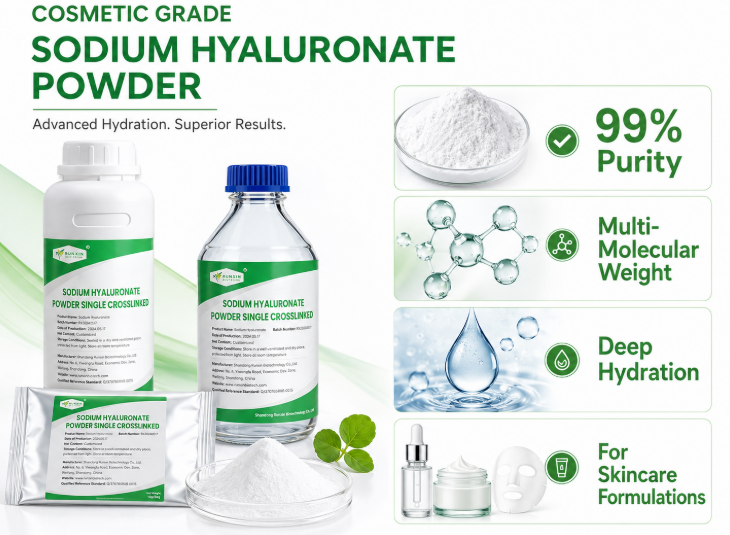
Description of Cosmetic Grade HA Powder
Cosmetic Grade Sodium Hyaluronate Powder is a premium-tier, water-soluble polysaccharide extracted through advanced fermentation processes, serving as an indispensable structural component of effective, high-performance skincare solutions.
This specialized powder represents the gold standard for formulators tasked with developing products that offer more than surface-level benefits. Unlike lower-grade alternatives that may contain impurities or inconsistent molecular structures, high-purity Sodium Hyaluronate acts as a sophisticated delivery system. It functions as a potent humectant, capable of holding up to 1,000 times its weight in water, thereby creating a reservoir of hydration within the epidermal layers.
The manufacturing process for this ingredient is strictly controlled to ensure the absence of heavy metals, pathogens, and other contaminants that could compromise the integrity of final skincare products. By utilizing high-purity cosmetic HA raw materials, manufacturers can ensure that their serums and creams maintain a stable shelf life and provide consistent results for the end user. This powder’s ability to integrate seamlessly into both oil-in-water and water-in-oil emulsions makes it a versatile tool for cosmetic chemists.
Furthermore, the cosmetic grade powder is characterized by its white, fine-particulate appearance and high solubility. When properly dispersed in an aqueous phase, it forms a clear, viscous gel that provides a luxurious sensory experience, which is a hallmark of premium skincare products. Its bio-compatible nature ensures that it is well-tolerated by virtually all skin types, including sensitive and acne-prone skin, cementing its reputation as a safe and effective hydration booster.
Molecular Weight of cosmetic grade HA Powder
The efficacy of Cosmetic Grade Sodium Hyaluronate Powder is primarily dictated by its molecular weight, which determines its specific ability to either reside on the skin surface for immediate plumping or penetrate deeply into the epidermis for long-term cellular hydration.
Molecular weight is the most critical variable in the formulation process, as it dictates the physical and physiological performance of the molecule. High molecular weight (HMW) versions, typically exceeding 1.5 million Daltons, function primarily as film-forming agents. They sit on the skin’s surface, preventing transepidermal water loss (TEWL) and creating a breathable, protective barrier against environmental stressors. This makes them ideal for daily moisturizers and soothing agents.
Conversely, low molecular weight (LMW) and ultra-low molecular weight varieties—often referred to as hydrolyzed forms—possess the ability to penetrate the stratum corneum. These smaller molecules reach deeper into the dermis, where they can stimulate the skin’s natural production of hyaluronic acid and provide deep-tissue hydration. Many sophisticated formulations now utilize a multi-molecular weight HA blend to offer a comprehensive, 360-degree hydration approach that addresses surface texture and deeper structural support simultaneously.
To help formulators select the appropriate range, the following table illustrates the common categorization used in the industry:
| Molecular Weight Category | Average MW (Daltons) | Primary Function |
| Ultra-Low | < 50,000 | Deep penetration, wrinkle reduction |
| Low | 50,000 - 500,000 | Cellular repair, enhanced absorption |
| Medium | 500,000 - 1,500,000 | Sustained hydration, barrier support |
| High | > 1,500,000 | Surface film formation, TEWL reduction |
Cosmetic Grade Sodium Hyaluronate Powder Specifications
To meet international quality standards, Cosmetic Grade Sodium Hyaluronate Powder must adhere to rigorous specifications, including at least 99% purity, specific viscosity requirements, and strict limits on microbial load and heavy metal content.
For B2B buyers and contract manufacturers, technical documentation is the most important indicator of quality. A high-grade HA powder should be accompanied by a Certificate of Analysis (COA) that verifies its fermentation source, usually derived from non-GMO bacterial strains. Purity is paramount; impurities such as nucleic acids or proteins can lead to formulation instability or irritation in the final product.
In addition to purity, viscosity is a key technical parameter. Viscosity is directly correlated to the molecular weight of the powder; therefore, maintaining a narrow molecular weight distribution is essential for batch-to-batch consistency. If the viscosity fluctuates, the sensory profile and the absorption rate of the finished product will also change, which is unacceptable for professional skincare lines.
Key technical benchmarks for premium grade HA include:
Purity: Greater than or equal to 99%.
Glucuronic Acid Content: Typically greater than 44%.
Heavy Metals: Less than 10 ppm total, with arsenic and lead strictly limited.
Microbiological Standards: Total aerobic microbial count should be less than 100 CFU/g.
Loss on Drying: Usually maintained below 10%.
Key Benefits of Cosmetic Grade Sodium Hyaluronate Powder
The primary benefits of Cosmetic Grade Sodium Hyaluronate Powder include exceptional transdermal water retention, immediate skin-plumping effects, and the promotion of a resilient skin barrier, which collectively combat the signs of premature aging.
The physiological impact of this ingredient goes far beyond simple hydration. When applied, Sodium Hyaluronate acts as a molecular sponge, drawing moisture from the atmosphere and deeper dermal layers to the surface of the skin. This immediate rehydration helps to smooth the appearance of fine lines and wrinkles, providing an instant "plumping" effect that makes the skin appear firmer and more youthful.
Furthermore, its role in supporting the skin’s barrier function cannot be overstated. By maintaining an optimal moisture environment, it facilitates better enzymatic activity in the skin, which supports natural exfoliation and cell turnover. This leads to an improvement in skin texture and radiance. When you source high-quality HA derivatives for your product line, you are essentially providing the building blocks for a healthier, more resilient skin barrier that can better withstand environmental aggression.
Key advantages include:
Superior Hydration: Unmatched ability to lock in moisture across various humidity levels.
Anti-Aging Efficacy: Visibly reduces the depth of fine lines and improves overall skin elasticity.
Enhanced Sensory Profile: Provides a silky, non-sticky texture that elevates the user experience of cosmetic creams and lotions.
Barrier Repair: Essential for post-procedure skincare (such as chemical peels or microdermabrasion) to calm the skin and prevent excessive drying.
Recommended Applications in Skincare Formulations
Cosmetic Grade Sodium Hyaluronate Powder is highly versatile and can be effectively incorporated into a wide array of formulations, including facial serums, anti-aging moisturizers, hydrating masks, and even color cosmetics that require a long-lasting moisturizing effect.
Formulators typically incorporate this ingredient in the aqueous phase of their formulas. Because of its high molecular weight and thickening properties, it is usually added at concentrations between 0.1% and 1%, depending on the desired viscosity and the intended outcome of the product. For high-end, high-concentration serums, experts often utilize a crosslinked hyaluronic acid solution to provide extended-release hydration.
To maximize the benefits of the powder in your formulations, consider these best practices:
Serum Formulations: Use a blend of low and high molecular weights to achieve both deep penetration and surface-level plumping.
Cream & Lotion Bases: Use as a secondary humectant combined with glycerin to create a multi-layer moisture complex.
Masks and Treatments: High concentrations can create a hydrogel texture that adheres well to the skin, delivering maximum active ingredients during use.
pH Stability: Ensure your final formulation is maintained within a pH range of 5.0 to 7.0, as Sodium Hyaluronate is most stable in slightly acidic to neutral environments.
Summary and Conclusion
Premium Cosmetic Grade Sodium Hyaluronate Powder is more than just a marketing buzzword; it is a scientifically validated ingredient essential for any high-performance skincare range. By understanding its molecular weight mechanics, adhering to strict technical specifications, and leveraging its ability to improve both the sensory and physical performance of products, brands can meet the growing demand for effective, science-based beauty. Whether you are developing a basic hydrating serum or a sophisticated anti-aging complex, selecting the right grade of Sodium Hyaluronate is the foundation of product excellence. By prioritizing purity and consistency, your brand can build trust with consumers and deliver the tangible results that define success in the modern skincare industry.