Beauty-from-Within supplements focus not only on caring for the surface of the skin, but also on daily diet, hydration, and nutritional supplementation. Sodium hyaluronate is a common functional ingredient in these products and is suitable for capsules, tablets, powders, beverages, and gummies designed around skin hydration, softness, and overall beauty nutrition.
The practical application of sodium hyaluronate is not simply a matter of adding the raw material to a product. The product format, molecular weight, addition level, preparation method, taste, packaging, and storage conditions can all affect the final performance. To develop a stable and easy-to-use beauty supplement, it is necessary to start with the characteristics of sodium hyaluronate, gradually assess product suitability, and then select an appropriate dosage form and processing method.
Mechanism of Action of Sodium Hyaluronate in Beauty-from-Within Supplements
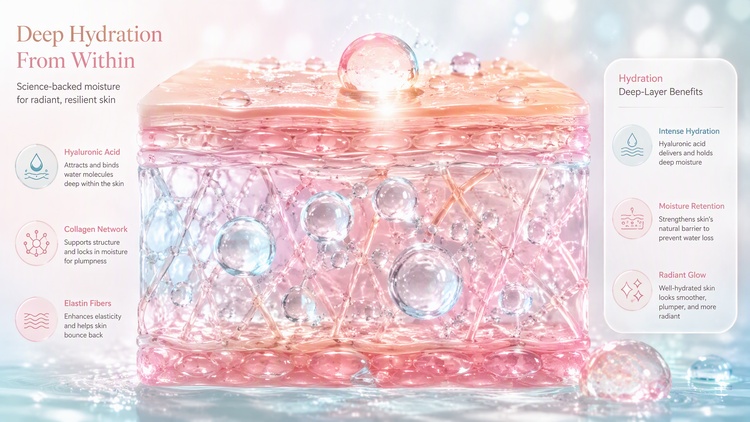
Hyaluronic acid is a polysaccharide naturally present in the human body and is widely distributed in the skin, joints, and other connective tissues. Sodium hyaluronate is the salt form of hyaluronic acid. It has good hydrophilicity, can bind water, and can form a viscoelastic system under certain conditions.
The skin’s hydrated appearance is influenced by many factors, including the water content of the stratum corneum, skin barrier condition, environmental humidity, sun exposure, cleansing methods, water intake, and daily routines. Sodium hyaluronate is commonly used in beauty nutrition products because it is associated with water management and the naturally occurring hyaluronic acid in skin tissue, allowing products to be designed around skin hydration, softness, and the environment related to elasticity.
Oral sodium hyaluronate and topical hyaluronic acid act in different environments. Topical products mainly come into contact with the skin surface and stratum corneum, whereas oral sodium hyaluronate must undergo digestion, absorption, and metabolism. It should not be simply understood that the intact raw material directly reaches the skin. The user experience of a product can also be affected by raw material specifications, addition level, duration of use, diet, sleep, water intake, and individual skin condition.
Therefore, sodium hyaluronate is more appropriately understood as part of a daily beauty nutrition system. It can serve as a primary functional ingredient in a product, or it can be combined with collagen, vitamin C, ceramides, elastin, or plant-derived ingredients to create different product directions.
How Can You Determine Whether Sodium Hyaluronate Fits the Product Positioning?
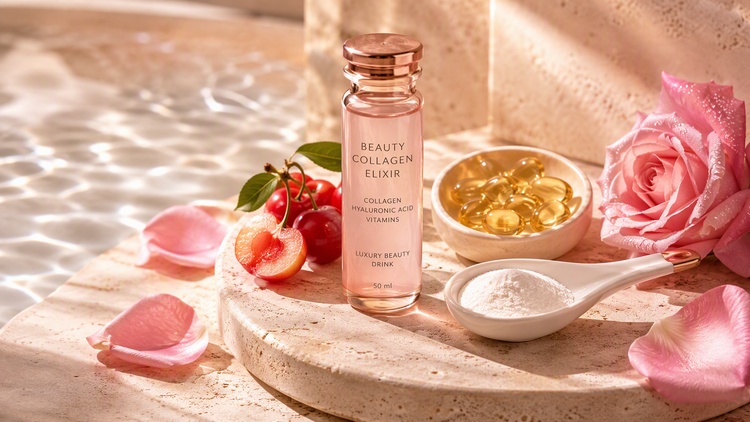
Whether sodium hyaluronate is suitable for a particular beauty supplement cannot be determined only by looking at the ingredient name or market popularity. Product positioning, dosage form, usage scenario, and target experience also need to be considered. Different products have different requirements for sodium hyaluronate.
Beauty Hydration Capsules
If the product is primarily positioned around daily beauty nutrition and skin hydration, sodium hyaluronate can be used as one of the core functional ingredients. Capsules do not require preparation in liquid, so there is less pressure on taste and they are suitable for combination with other powdered ingredients. The key points are powder blending uniformity, fill-weight stability, raw material moisture, and moisture protection of the packaging.
Beauty Beverages
Beverages can be incorporated into breakfast, afternoon tea, or daily hydration routines. The performance of sodium hyaluronate in liquids is affected by molecular weight, addition level, pH, minerals, botanical extracts, sweeteners, and heat treatment. During product development, particular attention should be paid to clarity, viscosity, taste, sedimentation, and changes over shelf life.
Products Combined with Collagen
Sodium hyaluronate and collagen can be used in combined beauty nutrition formulations. Such products require attention to the collagen source, flavor, acidity, solubility, and overall taste. If vitamins, fruit flavors, or botanical extracts are also included, the effects of different ingredients on color, odor, and stability should be observed.
Sports Beauty and Daily Nutrition Products

Post-workout beverages, portable powders, and daily nutrition products place greater emphasis on portability, ease of preparation, and the ability to maintain consistent use. The sodium hyaluronate specification should match the product’s water volume, drinking temperature, taste, and packaging format. For products requiring rapid preparation, dispersion speed and viscosity are generally more important than simply pursuing a higher molecular weight.
If the product has high requirements for a clean taste, transparency, or rapid dissolution, the specification should not be selected solely according to the raw material name. Small-scale testing in the specific formulation should be conducted instead.
How Should Sodium Hyaluronate Be Selected for Different Dosage Forms?
Different dosage forms change the way sodium hyaluronate is used and how the product performs. When selecting the raw material, first determine whether the finished product is solid, powdered, liquid, or gel-based, and then consider molecular weight, viscosity, moisture, and dispersibility.
Capsules and Tablets
Sodium hyaluronate is generally added in powder form to capsules and tablets. Key considerations include powder flowability, blending uniformity, fill-weight variation, moisture, tableting performance, tablet hardness, and disintegration.
If sodium hyaluronate is combined with collagen, vitamins, or botanical powders, it is necessary to confirm whether the particle size, bulk density, and flowability of the different powders are compatible. Excessive differences between powders may cause separation after blending or uneven fill weights. The packaging should also provide good moisture protection to reduce moisture uptake and caking during storage.
Powders
Powders usually need to be mixed with water or another beverage before consumption. Sodium hyaluronate gradually hydrates when it comes into contact with water. Molecular weight, addition level, water temperature, and order of addition all affect dispersion speed, viscosity, and taste.
Powder products require attention to both preparation experience and packaging condition. Moisture uptake may cause caking, reduced flowability, or slower dissolution. During product development, the condition of the powder under different humidity conditions should be observed, and its performance after opening should be tested within the specified period.
Liquids and Beauty Beverages
The main observation points for liquid products include pH, viscosity, transparency, sedimentation, odor, and taste. Minerals, acidulants, botanical extracts, and the preservation system may all change the dispersion state of sodium hyaluronate in the liquid.
If the product requires heat treatment or hot filling, appearance, viscosity, taste, and storage condition before and after treatment should also be compared. Liquid products should not be evaluated only immediately after production; attention should also be paid to whether turbidity, sedimentation, or color changes appear at different temperatures and storage times.
Gummies and Gel-Based Products
Gummies and gel-based products generally involve syrup, colloids, acidulants, heating, and cooling. After sodium hyaluronate is added, the gel strength, water condition, taste, surface adhesion, and changes in shape during storage should be observed.
If the heating time is too long, the temperature is too high, or the storage humidity is high, gummies may deform, stick together, change color, or develop a decline in taste. The raw material addition level and time of addition should also be determined through small-scale testing.
How Should Sodium Hyaluronate Raw Materials Suitable for Beauty Supplements Be Selected?
The selection of sodium hyaluronate raw materials should begin with the performance of the finished product rather than focusing on a single indicator. Molecular weight, viscosity, purity, moisture, and batch stability need to be considered together.
Molecular Weight and Viscosity
Molecular weight affects the dispersion speed, solution viscosity, and processing performance of sodium hyaluronate in water. Raw materials with a higher molecular weight generally tend to produce more noticeable viscosity, while raw materials with a lower molecular weight are generally easier to disperse. However, this does not mean that a higher molecular weight is suitable for every beauty product.
Beverages need to take freshness and mouthfeel into account, powders need to consider preparation speed, capsules and tablets need to consider powder blending, and gummies need to consider the colloidal system and processing conditions. The appropriate molecular weight should be determined in combination with the dosage form, addition level, water volume, temperature, pH, and combined ingredients.
Purity and Quality Indicators
Common quality indicators for sodium hyaluronate raw materials include appearance, identification, moisture, protein, ash, microbiological indicators, heavy metals, and viscosity. Different applications may have different requirements for indicators and test methods. When reviewing the documentation, attention should be paid to whether the specification range, test methods, and batch information are clear and complete.
Moisture directly affects powder flowability, weighing, and dispersion performance. Sodium hyaluronate is hydrophilic, so packaging integrity, warehouse humidity, and management after opening can all affect the powder condition. Stable packaging and appropriate storage conditions help maintain raw material consistency.
Packaging and Batch Stability
Sodium hyaluronate powder needs to be protected from moisture during transportation and storage. Packaging should match the product’s storage period, transportation environment, and frequency of opening. During continuous production, changes in appearance, moisture, molecular weight, and viscosity between different batches should also be monitored.
Stable raw material specifications help reduce batch-to-batch differences in product solubility, taste, viscosity, and finished-product appearance. For more information about the application performance of different molecular weights of sodium hyaluronate, refer to Runxin’s article comparing high- and low-molecular-weight sodium hyaluronate.
What Should Be Considered When Developing Sodium Hyaluronate Beauty Supplements?
Product development should begin with positioning, dosage form, and usage scenario rather than selecting a raw material specification first and forcing the formulation to adapt. The final performance of sodium hyaluronate generally needs to be confirmed through small-scale testing and stability observation.
Confirm the Product Positioning and Usage Scenario
First determine whether the product is a beauty hydration capsule, collagen beverage, ready-to-mix powder, gummy, or portable product intended for sports and daily nutrition. Different scenarios have different requirements for taste, dissolution speed, packaging, and storage conditions.
Complete Small-Scale Compatibility Observations
During small-scale testing, the dispersion, dissolution, viscosity, transparency, color, odor, taste, and sedimentation of sodium hyaluronate can be observed. For combination products, attention should also be paid to whether layering, caking, turbidity, or abnormal odor occurs after other powder or liquid ingredients are added.
Verify Processing Conditions
The order of addition, mixing speed, heating time, cooling process, pH adjustment, filtration, and filling method may all affect the final performance. Powders require attention to blending uniformity and moisture uptake, liquids require attention to shear, temperature, and filtration, and gummies require attention to heating and gel formation.
Conduct Stability Observations
Stability observations should cover different temperatures, humidity levels, light exposure, transportation conditions, and storage times. For powders, caking, flowability, and preparation condition can be observed; for beverages, transparency, sedimentation, odor, viscosity, and taste can be evaluated; for capsules and tablets, appearance, hardness, disintegration, and moisture uptake can be assessed; and for gummies, adhesion, deformation, color, and taste can be monitored.
Confirm Consistency in Mass Production
Good small-scale performance does not guarantee stable mass production. After scale-up, equipment, mixing time, addition speed, packaging materials, batches, and warehouse conditions may change. Before mass production, key process conditions and raw material batch performance should be confirmed to reduce differences between samples and commercial production.
Issues to Watch for When Using Different Product Forms
Powders: Pay Attention to Moisture, Caking, and Uneven Preparation
The most common problem with powders is moisture-induced caking. Sodium hyaluronate is hydrophilic, so inadequate package sealing, high environmental humidity, or prolonged exposure after opening may reduce powder flowability. Caking may also lead to uneven weighing, slower preparation, and changes in drinking sensation.
During preparation, if a large amount of powder is added all at once, the surface of the powder may hydrate rapidly while the inside forms a lump that is difficult to disperse. A more stable approach is to use a dry container, add an appropriate amount of liquid first, then gradually add the powder while mixing thoroughly. After opening, the powder should be resealed promptly and should not be left in a humid or high-temperature environment.
Beverages: Pay Attention to Ratios, Temperature, Turbidity, and Storage Changes
The addition level of sodium hyaluronate and the liquid ratio in a beverage affect viscosity and taste. Too little water may make the beverage excessively viscous, while acidity, minerals, and botanical ingredients in the formulation may also affect clarity and stability.
Temperature changes also require attention. Excessively high temperatures, prolonged heating, or unsuitable heat-treatment conditions may change the appearance and taste of the liquid. During storage, observe whether turbidity, sedimentation, abnormal odor, or color changes appear. The beverage should be prepared according to the product instructions, with the ratio and temperature controlled as specified and the product stored under the required conditions.
Capsules and Tablets: Pay Attention to Moisture, Fill Weight, and Disintegration
Sodium hyaluronate in capsules and tablets is usually used in combination with other powders. Differences in particle size, density, and flowability between powders may lead to uneven blending or fill-weight variation. If the raw material absorbs moisture, reduced powder flowability may also affect capsule filling and tablet compression.
Tablets also require observation of hardness, friability, and disintegration. Excessively high storage temperatures or humid conditions may change the appearance of capsules or cause tablets to soften, discolor, or show abnormal disintegration. Products should be used according to the label and kept sealed and dry, away from high temperatures and humidity.
Gummies: Pay Attention to High-Temperature Deformation, Adhesion, and Taste Changes
The moisture content, sugar-gel system, acidity, and storage temperature of gummies all affect product condition. At higher temperatures, gummies may soften, deform, or stick together. At high humidity, the surface may become sticky. During longer storage, color, odor, and taste may also change.
After sodium hyaluronate is added to a gummy formulation, its compatibility with the sugar-gel system and its effect on product texture during heating and cooling should be observed. Finished products should be stored in sealed packaging and protected from high temperatures, direct sunlight, and humidity. If obvious adhesion, deformation, abnormal odor, color change, or a decline in taste occurs, stop using the product and check the product information.
What Information Should Be Confirmed from Sample to Mass Production?
When developing sodium hyaluronate beauty supplements, it is necessary to understand not only the raw material name, but also information related to its specific application. Different product formats require attention to different information.
Common documentation includes:
Product specification sheet
Batch COA
SDS
Raw material source information
Test items and test methods
Packaging format
Storage conditions
Sample and application recommendations
Dispersion, dissolution, or compatibility test information
Batch consistency information
For powders or capsules, moisture, flowability, packaging, and moisture-protection conditions should be prioritized. For beverages, dispersion, viscosity, transparency, and storage performance should be emphasized. For gummies, heating, the colloidal system, moisture, and taste changes should receive particular attention.
From the time the sample enters small-scale testing through formulation scale-up and mass production, the raw material batch, processing conditions, and finished-product performance should continue to be recorded. This makes it easier to determine whether a problem comes from the raw material, formulation, equipment, or storage environment and helps maintain consistency between different batches.
Frequently Asked Questions
Is sodium hyaluronate suitable for Beauty-from-Within supplements?
Sodium hyaluronate can be used as a functional ingredient in oral beauty supplements to design products around skin hydration, softness, and overall beauty nutrition. Whether it is suitable for a particular product also needs to be assessed according to the dosage form, addition level, taste, and formulation stability.
Is higher-molecular-weight sodium hyaluronate always better?
Not necessarily. Molecular weight affects viscosity, dispersion speed, taste, and processing performance. Beverages, powders, capsules, tablets, and gummies have different requirements for raw materials, so the appropriate specification should be selected according to the specific product format.
Why do beauty beverages become turbid or develop sediment?
This may be related to pH, minerals, acidulants, botanical extracts, the preservation system, heat treatment, and storage time. The formulation composition, processing conditions, and storage records need to be reviewed item by item. The issue should not be attributed to sodium hyaluronate alone without further observation.
Why does sodium hyaluronate powder cake?
Common causes include moisture uptake, inadequate package sealing, high environmental humidity, excessive exposure after opening, and unsuitable storage temperature. The powder should be stored in a dry, cool place and resealed promptly after use.
Is sodium hyaluronate suitable for capsules, powders, or beverages?
All three formats can be used for product development. Capsules are convenient for dosing and portability, powders are suitable for preparation and drinking occasions, and beverages emphasize ready-to-drink convenience. The final choice depends on product positioning, taste, addition level, packaging, and storage conditions.
What information can be requested from a factory when developing sodium hyaluronate beauty products?
You can request the specification sheet, COA, SDS, raw material source, test items, packaging, and storage conditions. You can also confirm application information such as samples, dispersibility, solubility, compatibility, and batch stability.
Further Reading
To learn more about the performance of sodium hyaluronate in different products, you can continue reading from several perspectives, including raw material characteristics, skincare applications, dietary supplement formats, and molecular-weight differences. The dispersibility, viscosity, hydrophilicity, and storage condition of sodium hyaluronate may appear differently in different products. The following Runxin Biotech articles introduce sodium hyaluronate powder, skincare applications, dietary supplement applications, and molecular-weight differences, helping readers connect raw material characteristics with actual product experience.
What are the characteristics of sodium hyaluronate powder?
The role and applications of sodium hyaluronate in skincare
Applications and formulation considerations for sodium hyaluronate in dietary supplements
Comparison of high-molecular-weight and low-molecular-weight sodium hyaluronate
This article provides general information about sodium hyaluronate and Beauty-from-Within supplements.