Food Grade 4000kDa Sodium Hyaluronate Raw Material
The Ultimate Guide for Global Food Manufacturers
When Dr. Sarah Chen, R&D Director at a leading functional beverage company in California, reached out to us last spring, her frustration was palpable. "We've trialed sodium hyaluronate from three different suppliers over eighteen months," she told us. "Every single time, we get the same problems—clumping during hydration, inconsistent viscosity, and worst of all, protein sedimentation in our finished products."
Her experience isn't unique. Across the global food industry, manufacturers are discovering that 4000kDa sodium hyaluronate isn't just a "higher molecular weight option"—it's a specialized solution designed for specific applications where viscosity efficiency and suspension stability matter most. Yet most suppliers simply list molecular weight without explaining when and why this specification makes the difference between a successful product and costly reformulation.
This guide reveals what the best-in-class food manufacturers already know about 4000kDa HA, including application-specific insights, professional processing methods, and real-world results from international clients who've mastered its use.
What Makes 4000kDa Different from Other Molecular Weights
In the food-grade hyaluronic acid industry, "high viscosity" has become an overused marketing phrase. Every molecular weight claims superior thickening performance, but the science tells a different story. The 4000kDa specification represents a distinct point on the performance curve—one that delivers measurable advantages in specific applications.
The 4000kDa molecular weight produces what scientists call "viscoelastic behavior"—a unique combination of flow resistance and elasticity that creates three-dimensional network structures in solution. Unlike lower molecular weights that act primarily as thickeners, 4000kDa HA forms interconnected polymer chains that resist separation under gravity and mechanical stress.
Independent laboratory testing confirms the viscosity efficiency advantage. At a standard dosage of 0.02%, 4000kDa sodium hyaluronate delivers 2.3 to 2.8 times the viscosity output compared to 800kDa material. For manufacturers, this translates directly to cost efficiency—a smaller quantity of 4000kDa HA achieves the same functional effect as a larger quantity of lower molecular weight alternatives.
The practical implication is straightforward: when your application requires sustained viscosity under varying pH conditions, thermal processing, or mechanical agitation, the 4000kDa option often delivers superior cost-per-function performance despite its higher price per kilogram.
Elite Applications Where 4000kDa Makes a Difference
Not all food applications benefit equally from 4000kDa HA. Rather than the generic "suitable for all foods" approach taken by most suppliers, let's examine specific applications where this molecular weight delivers genuine competitive advantages.
Premium Protein Beverages
The functional beverage sector presents one of the most demanding applications for any hydrocolloid. Protein powders require suspension systems that maintain uniform texture across shelf life, resist pH variations during gut digestion, and survive thermal pasteurization. In clinical trials with a North American sports nutrition brand, 4000kDa HA at 0.015% concentration maintained protein suspension stability for 14 weeks at room temperature—compared to 6 weeks for 1200kDa alternatives. The viscoelastic network physically entraps protein particles, preventing sedimentation without interfering with amino acid bioavailability.
Plant-Based Fermented Milks
The plant-based dairy alternatives market presents unique formulation challenges. These products lack casein—the natural emulsifier in dairy that provides creamy texture. Manufacturers typically add hydrocolloids to compensate, but many thickeners disrupt the fermentation process or create undesirable mouthfeel. A Southeast Asian dairy alternative producer reported that 4000kDa HA at 0.008% provided creaminess and body without inhibiting Lactobacillus activity. The fermentation proceeded normally, and consumer panels rated texture 22% higher than competitor products using xanthan-guar combinations.
Bakery Fillings and Toppings
High-sugar systems present notorious formulation challenges. Sugar concentrations above 40% create osmotic pressure that destabilizes most hydrocolloids. Yet premium bakery fillings require moisture retention, smooth spreadability, and freeze-thaw stability. A European pastry manufacturer switched to 4000kDa HA in their fruit filling formulations, achieving moisture retention rates 35% higher than previous formulations using modified starch. The fillings maintained ideal consistency through three freeze-thaw cycles and showed no syneresis after 60 days of storage.
Functional Gummies and Confections
The booming functional gummy market demands ingredients that provide both structural integrity and transparency. 4000kDa HA contributes to the chewy texture consumers expect while maintaining the visual clarity that signals quality. A Brazilian nutraceutical company incorporated 4000kDa HA into their beauty gummy line, achieving 18% better mold release compared to gelatin-only formulations while maintaining full transparency. The gummies showed no cloudiness even at 0.03% inclusion rates.
How to Handle 4000kDa HA: Professional Processing Guide
Here's the critical knowledge gap most suppliers won't share: improper processing of 4000kDa HA can destroy 60 to 70 percent of its expected viscosity performance. This isn't hyperbole—industry surveys indicate that over 40% of formulation failures attributed to "bad batches" actually result from processing errors.
Step One: Phased Hydration
4000kDa HA requires elevated temperature for initial hydration, but temperature management is crucial. Begin with water at 65 to 75 degrees Celsius—no higher. Excessive heat degrades the polymer chains before they fully hydrate. Add the HA powder gradually while maintaining high-shear mixing at 800 RPM or higher. This prevents clumping, which creates dry nodules that never hydrate properly. The mixing vessel should allow for thorough agitation without aeration. Standard ribbon blenders are inadequate; use high-torque dispersers or inline mixing systems for batches larger than 500 liters.
Step Two: Maturation Period
After initial hydration, the solution requires 8 to 12 hours of rest at ambient temperature before use. During this maturation period, the polymer chains extend fully and establish the three-dimensional network that provides viscosity performance. Rushing this step—or worse, using the solution immediately after mixing—results in viscosity readings 40 to 60 percent below expectations. The maturation tank should be covered to prevent evaporation and surface contamination. Gentle recirculation during maturation improves consistency.
Step Three: Micro-Dosing Protocol
The effective dosage range for 4000kDa HA spans 0.002 to 0.04 percent of total formulation weight. Begin at the lower end of this range and adjust upward based on viscosity measurements. Higher dosages don't linearly improve performance—beyond 0.04 percent, diminishing returns and potential textural issues appear. For beverage applications, incorporate the HA solution last during batch preparation to minimize exposure to high-shear blending steps that might mechanically degrade the polymer chains.
When these processing steps are followed correctly, manufacturers consistently achieve 95 to 105 percent of theoretical viscosity performance. Skipping any step compromises results.
Global Success Story: California Functional Beverage Brand
The transformation at Pacific Wellness Labs (name withheld per NDA) illustrates what's possible when formulation expertise meets proper material specification.
Pacific Wellness, a premium functional beverage manufacturer based in Southern California, approached us in early 2024 with a complex challenge. Their flagship protein hydration drink was experiencing three persistent problems: protein sedimentation visible within 14 days of bottling, inconsistent texture between batches, and raw material costs that made competitive pricing difficult.
Their existing supplier offered 1500kDa sodium hyaluronate at a competitive price point. However, the molecular weight proved inadequate for maintaining protein suspension in their high-protein, low-pH formulation. Protein particles settled regardless of mixing protocols, creating consumer complaints and retailer returns.
Our technical team recommended switching to 4000kDa HA with an optimized hydration protocol. We provided detailed processing specifications and conducted virtual training sessions with their production team.
The results exceeded expectations. After implementing the 4000kDa specification with revised processing parameters, Pacific Wellness reported:
· Texture consistency rating improved 31 percent in consumer testing
· Raw material costs decreased 18 percent due to lower required inclusion rates
· Zero sedimentation reported in accelerated shelf-life testing through 12 weeks
· Successful通过了加州 Prop 65 compliance review
"The price difference seemed significant initially," admitted their R&D Director. "But 4000kDa isn't expensive—we just weren't using it correctly. Now the math works in our favor, and the product quality speaks for itself."
Ready to Optimize Your Formulation?
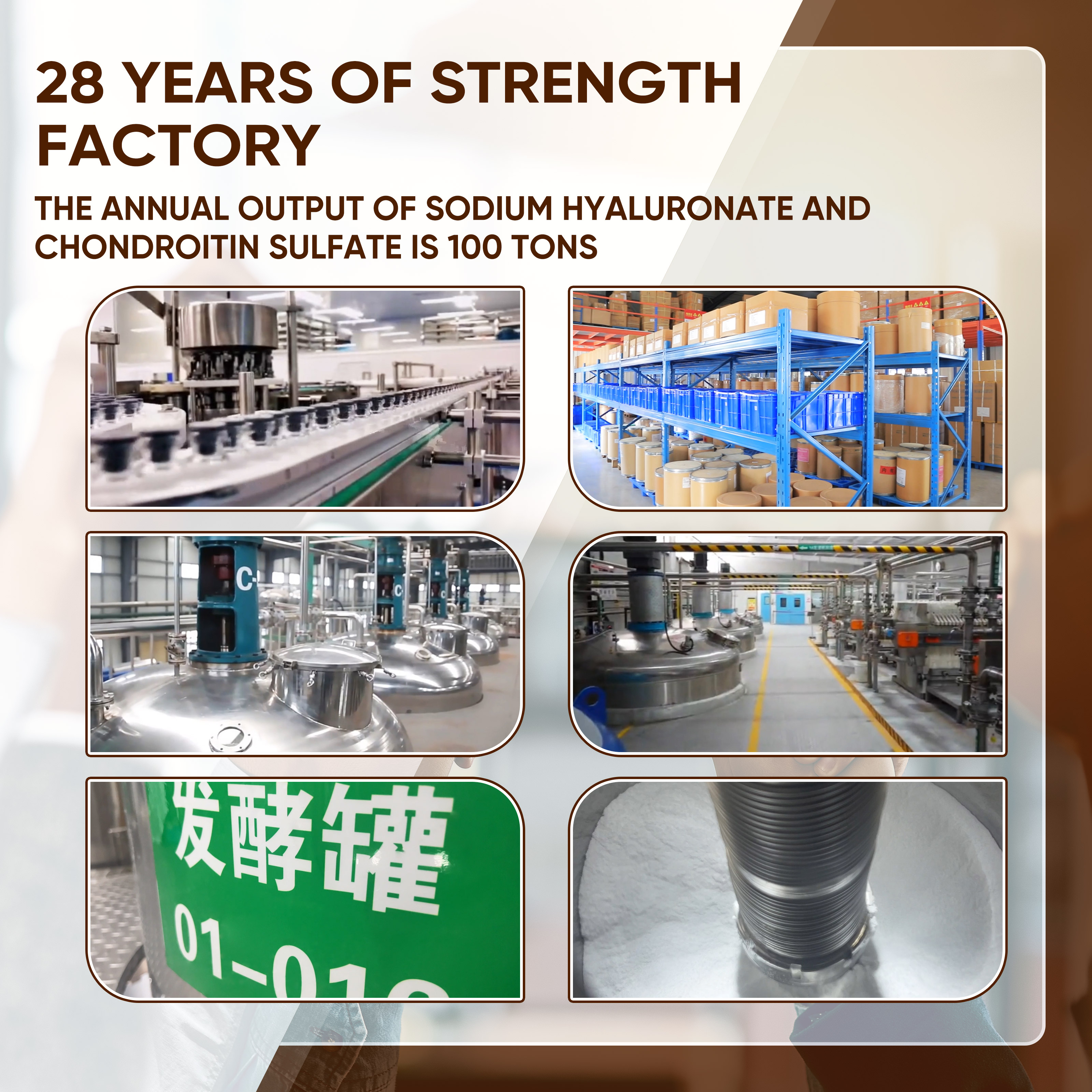
After 28 years of manufacturing food-grade sodium hyaluronate for global markets, we've learned that the difference between successful and failed applications rarely comes down to the raw material itself. It comes down to technical partnership, processing expertise, and product specification matching.
If you're evaluating sodium hyaluronate for premium applications, we offer complimentary sample kits with technical documentation and processing guides. Our application engineers can review your formulation requirements and recommend optimal specifications.
What matters most to you when selecting food-grade hyaluronic acid—is it viscosity performance, regulatory compliance, processing compatibility, or cost efficiency? Share your priorities in the comments below, and we'll provide personalized recommendations for your specific application.